
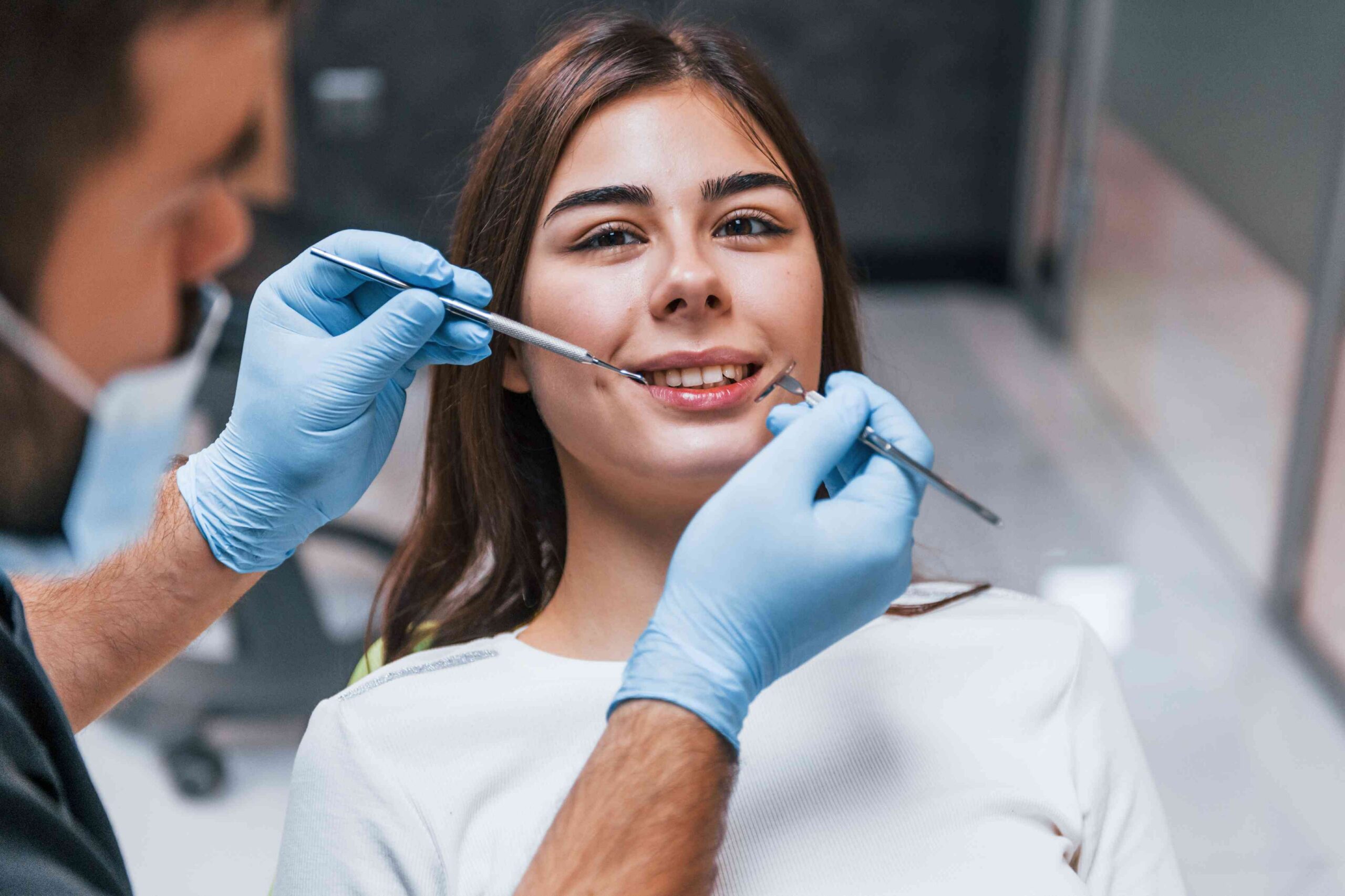
Dental implants may be considered suitable for patients who need to replace one or more missing teeth with restorations supported by the jaw. Patients in Brampton, Georgetown, and Caledon should have gum health, bone support, bite force, medical history, healing factors, nearby teeth, and home care reviewed before treatment is planned. The final replacement may be a crown, bridge, or denture attachment depending on the number of missing teeth and long-term function.
A missing tooth can change more than the way a smile looks. Someone in Brampton may avoid chewing on one side. A patient in Georgetown may notice food collected in an open space. Someone in Caledon may feel that nearby teeth have shifted after a tooth was removed years ago.
Choosing dental implants in Georgetown ON should start with a full-mouth review rather than a quick decision about the gap. The dentist may need to examine the gums, bone shape, bite pressure, medical history, healing ability, and the condition of nearby teeth. Some patients may be ready to discuss implant-supported care after an exam. Others may need gum treatment, bone evaluation, repair of nearby teeth, or another replacement option before a final plan is recommended.
A Gap Can Change How the Mouth Works
A missing tooth leaves open space, but the effects can spread through the bite. Teeth beside the space may lean. The tooth above or below may move because it no longer meets a chewing partner. Food may be packed into the area, making cleaning harder.
For selected patients, dental implants may be discussed because they are supported by the jaw rather than using nearby teeth in the same way as a traditional bridge. The implant itself is the foundation. The visible replacement is attached later.
This foundation has to fit the mouth as it is now. A gap that has been present for years may need a different plan than a tooth that was recently removed.
Gums Need to Be Stable Before Replacement
Gum health matters before and after tooth replacement. Bleeding, swelling, deep pockets, or active gum disease may need attention before implant-supported treatment is considered.
An implant cannot get a cavity, but the tissue around it can still become inflamed. Plaque left near the gumline may affect comfort and long-term support.
Before Dental Implant Treatment is recommended, the dentist may review gum stability and home cleaning habits. If gum care is needed first, that step can help create a healthier foundation for future care.
The Treatment Conversation Should Be Specific
A patient asking about Dental Implant Treatment may expect a single answer, but the plan depends on the mouth, health history, and missing tooth area.
The conversation may include medical conditions, medications, smoking, diabetes, dry mouth, grinding, healing ability, and previous dental treatment. The dentist may also review whether nearby teeth are stable or need care.
This step helps patients understand whether the goal is replacing one tooth, several teeth, or improving support for a larger appliance. A clear explanation also helps patients know why timing may vary.
Services Include More Than Placement
Patients searching for Dental Implant Services may think mostly about the implant being placed. The final restoration matters just as much.
A single missing tooth may be restored with a crown. Several missing teeth may need a bridge or another design. Some patients may need attachments to support a denture. Each option has different cleaning needs, bite considerations, and follow-up requirements.
The implant foundation and the final tooth should be planned together. A replacement should help with chewing, comfort, and daily cleaning.
Tooth Implant Language Can Be Confusing
People often use the phrase Tooth Implants to describe the entire replacement. In dental planning, there are different parts.
The implant is placed in the jaw. A connector helps join the implant to the final restoration. The visible replacement may be a crown, bridge, or attachment depending on the case.
Knowing these parts can make the process easier to follow. Patients can better understand what is temporary, what is healing, and what is meant to be the final restoration.
Nearby Teeth Still Affect the Plan
Even when an implant-supported restoration does not rely on neighboring teeth the same way a bridge does, those teeth still influence the result. They shape the space, appearance, bite contacts, and cleaning access.
A tooth beside the gap may be tilted, crowned, decayed, loose, or worn. If it needs care, the order of treatment may change. A narrow space may also affect the size and shape of the final restoration.
This is why the dentist checks the full area rather than only the missing tooth space.
Services Should Include Maintenance
A second conversation about Dental Implant Services should focus on what happens after the final restoration is placed. Implant-supported restorations still need regular dental visits, bite checks, and cleaning guidance.
Patients should report soreness, bleeding, swelling, looseness, bad taste, or changes in chewing. These signs should be checked rather than ignored.
Long-term care depends on more than the day the restoration is placed. Maintenance helps protect the surrounding tissue and replacement.
Cleaning Access Should Be Planned Early
A second mention of Tooth Implants belongs to the hygiene discussion. If the final crown, bridge, or attachment is difficult to clean, plaque can be collected around the gumline.
The dental team may recommend floss threaders, small brushes, water flossers, or other tools based on the final design. A single crown may need different cleaning steps than a larger bridge or denture attachment.
Patients should understand how to clean the replacement before treatment is considered complete.
What to Expect at the Consultation
Before the visit, patients should think about how long the tooth has been missing, whether chewing feels different, whether food traps in space, and whether nearby teeth have shifted. Medication lists, health conditions, smoking history, grinding habits, and past dental treatment should also be shared.
During a visit with Balogh Dental, the dentist may examine the missing tooth area, gums, bites, old dental work, oral tissues, and nearby teeth. X-rays or imaging may be recommended to evaluate bone and supporting structures.
After the exam, patients should understand whether implant-supported care may be suitable and what should happen before a final decision.
The Final Tooth Has to Function
The visible replacement should be shaped for its job. A front tooth may need careful shade and contour planning. A back tooth may need strength and balanced contact for chewing.
A third use of dental implants should connect the foundation with the final function. The implant and restoration need to be planned together, so the replacement feels usable, cleanable, and stable.
Patients should ask what part of care is temporary, what part is final, and how the restoration will be monitored over time.
Benefits of a Careful Replacement Plan
For suitable patients, dental implants may help replace missing teeth, support chewing, fill visible gaps, and improve bite stability with a crown, bridge, or attachment.
Benefits depend on gum health, bone support, healing, medical history, restoration design, bite force, and daily care. Implant-supported treatment is not right for every patient, and some people may need a different option.
A strong recommendation comes from a full evaluation, not the missing space alone.
Local Patient Review
“I thought replacing a missing tooth would only involve the open space. The visit helped me understand why bone, gums, bite, and cleaning all affected the plan.”
Missing Tooth Care Requires a Full-Mouth View
Restoring a missing tooth involves looking at the bigger picture, as successful outcomes rely on evaluating bone density, gum health, bite alignment, and long-term upkeep. Residents across Brampton, Georgetown, and Caledon can make more confident choices about their smile when these vital factors are carefully reviewed. Balogh Dental helps you explore the most suitable replacement options for your gap and outlines the practical steps that come next.
Frequently Asked Questions
What does the dentist check first?
The dentist may review gums, bone support, bite force, nearby teeth, medical history, and cleaning habits.
Can every missing tooth be replaced the same way?
No. The right option depends on the location, space, oral health, bite, and long-term maintenance needs.
Can one missing tooth affect other teeth?
Yes. Nearby teeth may shift, chewing pressure can change, and food may be collected near the open space.
Do replacement teeth need daily cleaning?
Yes. All replacement options need brushing, cleaning between teeth, and regular dental monitoring.
Why is medical history part of planning?
Health conditions, medications, smoking, dry mouth, and healing factors can affect treatment recommendations.
Will the final tooth look natural?
The dentist considers shade, shape, location, gumline, and nearby teeth, but results depend on the case.
Can treatment take more than one visit?
Yes. Timing may depend on healing, imaging, gum health, restoration design, and treatment stages.
What should I ask during the consultation?
Ask about suitability, support, cleaning, treatment steps, follow-up needs, and long-term care.